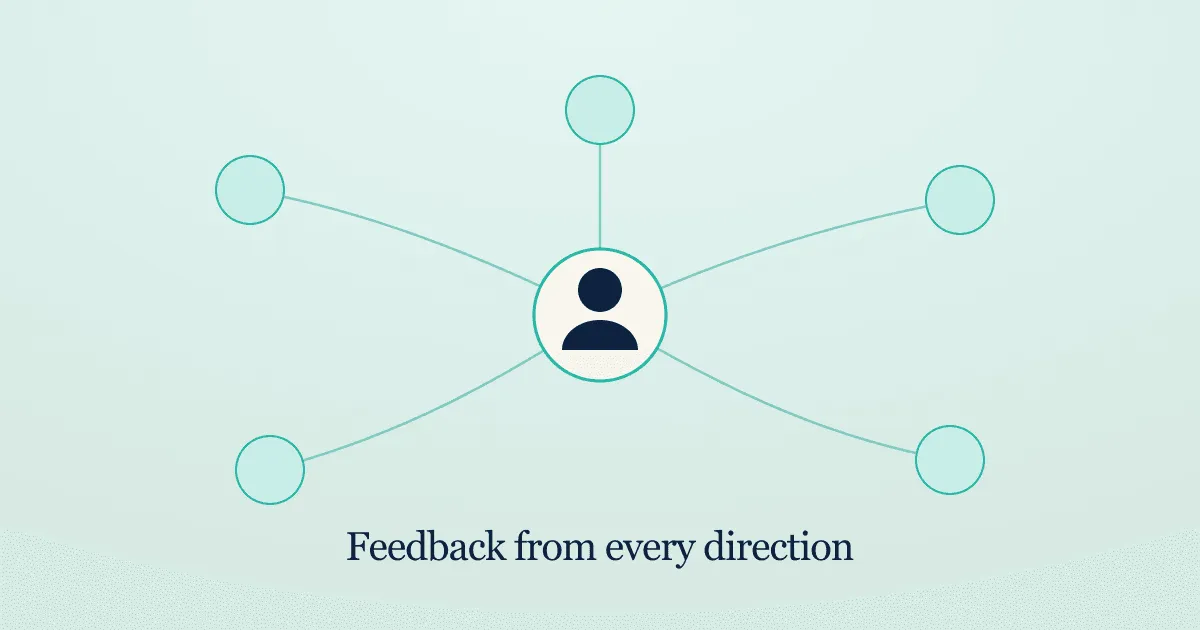
Most 360 feedback tools are built for the annual, company-wide performance cycle: calibration, competency matrices, rating curves, admin consoles. If you manage a team of five or ten, that machinery is overkill. You don’t want a programme. You want honest input about one person, in time for your next 1:1.
Here’s the lightweight version.
Start with a single question
Before you invite anyone, decide what the feedback is for. A 360 that feeds a growth conversation looks different from one that feeds a promotion case. Pick one purpose per cycle. It keeps the questions short and the reviewers focused.
Keep the reviewer list small
Four to six people is plenty: a couple of peers, someone they mentor or lead, a stakeholder from another team. More than that and you get diminishing returns and slower completion. Fewer than three and patterns are hard to read.
Make privacy the default, and say so honestly
The fastest way to get thin, guarded feedback is to make people wonder who will read it. Be explicit: feedback is confidential to you, the manager. You’ll use it to prepare a summary — the reviewed person never sees the raw report, and no reviewer’s name reaches them unless that reviewer chooses to share it.
That single promise, stated up front, is what turns a polite paragraph into something specific and useful.
Automate the nagging, not the thinking
The one piece of “platform” worth having is reminders. Chasing five people over email is the part managers quietly drop — and it’s exactly the part a tool should do for you. Set a due date, let reminders go out automatically, and spend your attention on reading the results, not collecting them.
Then actually use it
Feedback that lands in a folder is wasted. Read it before your next 1:1, pull out two or three themes, and bring them to a real conversation. The report is raw material; your summary is the product.
That’s the whole workflow: one purpose, a handful of reviewers, a clear privacy promise, automatic reminders, and a conversation at the end. No calibration meetings, no competency spreadsheets — just the useful part of a 360.
If that’s the version you want to run, Kandorly does exactly this, and your first cycle is free.